Introduction to Earth’s Hidden Paradises: Desert Oases
Imagine traversing endless expanses of sand dunes, only to stumble upon a breathtaking oasis flourishing amidst the arid desert. This serene juxtaposition of life amid barren landscapes has fascinated travelers for centuries. In 2026, desert oases are more accessible and enticing than ever, offering unique escapes from the hustle and bustle of modern life.
In this article, we’ll explore some of the world’s most mesmerizing desert oases that promise not just visual splendor but also cultural richness. Whether you’re an adventurer, a nature lover, or a history buff, these hidden paradises offer something for everyone.
Siwa Oasis: Egypt’s Timeless Wonder
The Siwa Oasis in Egypt is a treasure trove of history and culture. Nestled near the Libyan border, Siwa boasts an ancient charm with mud-brick structures and palm-fringed springs. Here, you’ll find the Oracle of Amun Temple, where Alexander the Great sought guidance. The salt lakes surrounding the oasis provide a surreal backdrop, reflecting the changing colors of the sky, while the rich Berber culture offers a welcoming embrace to curious travelers.
Don’t miss the opportunity to taste the local delicacy, Siwa olives, and immerse yourself in the therapeutic hot springs. Whether cycling through the ancient streets or simply enjoying the starry desert nights, Siwa is a tranquil haven for those seeking solace.
Huacachina: Peru’s Desert Oasis
Huacachina, a tiny village in Peru, is a striking contrast to the sprawling desert that envelops it. Known as the “Oasis of America,” Huacachina’s emerald lagoon, surrounded by towering dunes, is a hotspot for thrill-seekers. Sandboarding and dune buggy rides offer an adrenaline rush, while a leisurely paddle on the lagoon provides relaxation.
The local legends speak of a mermaid living in the lagoon, adding a mystical touch to this enchanting landscape. As the sun sets, the desert transforms into a canvas of golden hues, inviting photographers and nature enthusiasts alike to capture its beauty.
Al Hasa Oasis: Saudi Arabia’s Verdant Gem
Al Hasa Oasis in Saudi Arabia is one of the world’s largest oases, sprawling over 30,000 acres. Recognized as a UNESCO World Heritage site, it’s an agricultural haven with over two million date palms. This oasis is not just about lush greenery; it holds a rich tapestry of history, with archaeological sites dating back to prehistoric times.
Visitors can explore the ancient Qasr Ibrahim Palace, marvel at the intricate carvings of Jabal Al-Qarah, and experience traditional Saudi hospitality in local markets. A visit to Al Hasa is a journey through time and nature, offering an authentic Arabian experience.
Ubari Lakes: Libya’s Hidden Paradise
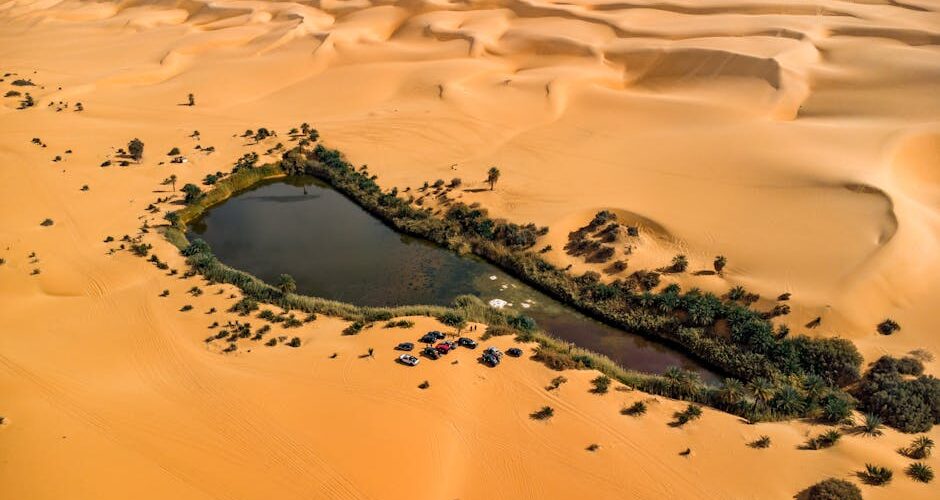
In the heart of the Sahara, the Ubari Sand Sea cradles a series of spectacular oases known as the Ubari Lakes. While the region remains relatively unexplored, these lakes, such as Lake Gaberoun and Lake Mandara, are surreal spectacles set against a backdrop of vast dunes. The saltwater lakes are fringed with palm trees, creating picture-perfect scenes.
Staying in traditional Berber camps allows visitors to connect with the nomadic cultures of the Sahara. The tranquility of the Ubari Lakes offers a sense of isolation from the world, making it a perfect retreat for those looking to disconnect and rejuvenate.
Practical Takeaway: Planning Your Oasis Adventure
Embarking on a journey to these desert oases requires careful planning. Here are some practical tips to enhance your experience:
- Research and Timing: Learn about the cultural significance and best times to visit to avoid extreme weather conditions.
- Local Guides: Hire knowledgeable local guides to gain deeper insights into the history and culture of each oasis.
- Pack Wisely: Bring appropriate clothing for desert climates, and don’t forget essentials like sunscreen and plenty of water.
- Respect Local Traditions: Engage with local communities respectfully and embrace their customs.
As you wander these remote paradises, you’ll find that desert oases are more than just geographical wonders; they are gateways to extraordinary cultural and natural experiences. In 2026, let these hidden gems inspire your next adventure.